

Code reading in manufacturing is no longer limited to decoding a barcode and moving on. In many production environments, the inspection task also includes reading printed text, validating serialized data, confirming label accuracy, and triggering a response before the product leaves the station. That is where deep edge AI changes the approach.
Deep edge AI code reading combines image capture, AI-based OCR, barcode decoding, and decision-making directly within the inspection device. Instead of sending images to an external PC for processing, the system executes inspection at the point of capture. This reduces latency, simplifies system design, and helps manufacturers maintain traceability at line speed.
What Gocator 2D Smart Cameras Do Differently
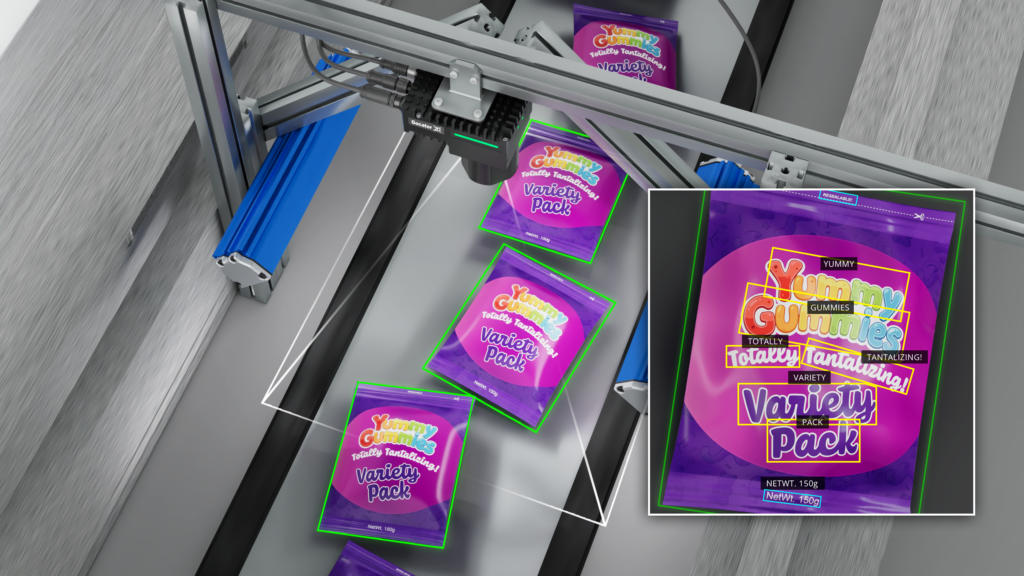
Gocator 2D Smart Cameras are designed for inspection tasks that must happen inline and in real time. In code reading applications, that includes locating labels or marked regions, decoding 1D and 2D codes, extracting printed text, validating the result, and issuing pass/fail or sorting outputs from the same device.
This matters because traceability failures are rarely caused by one missing barcode. More often, the challenge is variation: inconsistent print quality, changing part presentation, reflective packaging, variable lighting, or the need to combine code reading with downstream validation logic. A smart camera architecture is valuable when the inspection task extends beyond decoding into production decision-making.
How On-Device Code Reading Works
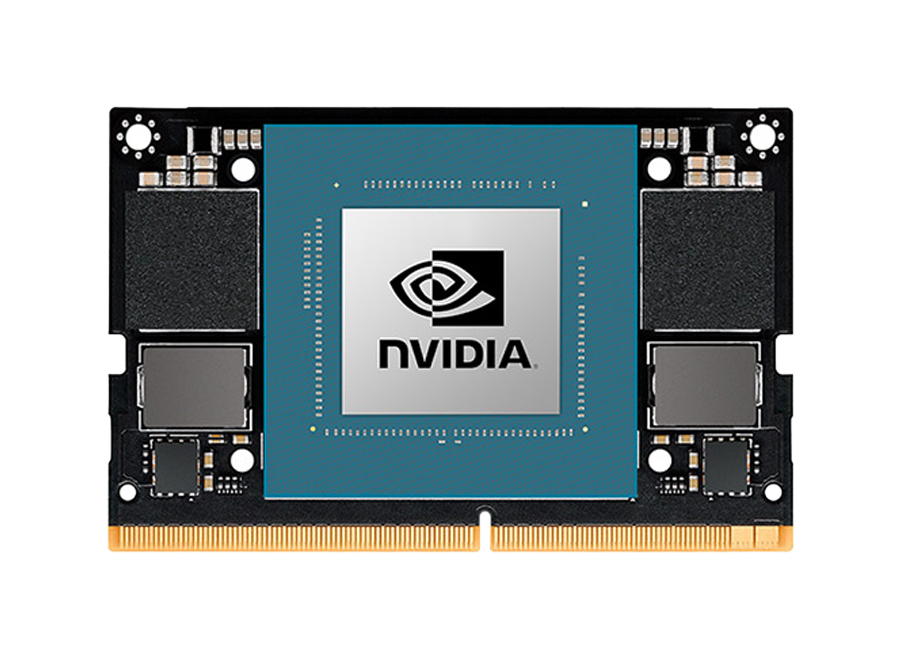
At the core of the system is an embedded NVIDIA Jetson Orin NX GPU processor that allows image analysis and inference to run directly on the camera. This supports a unified inspection workflow in which the device can:
- Detect labels, barcodes, and regions of interest on fast moving parts
- Decode 1D and 2D symbologies such as QR and Data Matrix
- Extract printed text using AI-based OCR
- Validate values against expected formats or reference data
- Trigger real-time pass/fail or sorting actions
Because these steps occur within one inspection environment, manufacturers can reduce handoffs between devices and avoid the integration overhead of separate vision software, external processing, and decision logic.
Why This Matters at Production Scale
In traceability inspection, speed alone is not the real benchmark. The harder requirement is maintaining reliable inspection as conditions change across products, shifts, and production lines. A code may be readable in a lab but become inconsistent in production due to glare, motion, packaging variation, or degraded print quality.
That is why on-device inspection architecture matters. When acquisition, processing, validation, and industrial communication are handled in one system, response becomes more predictable and deployment becomes easier to scale. The result is a simpler inspection cell with fewer dependencies and fewer points of failure.
High-Speed Inspection with Validation Built In
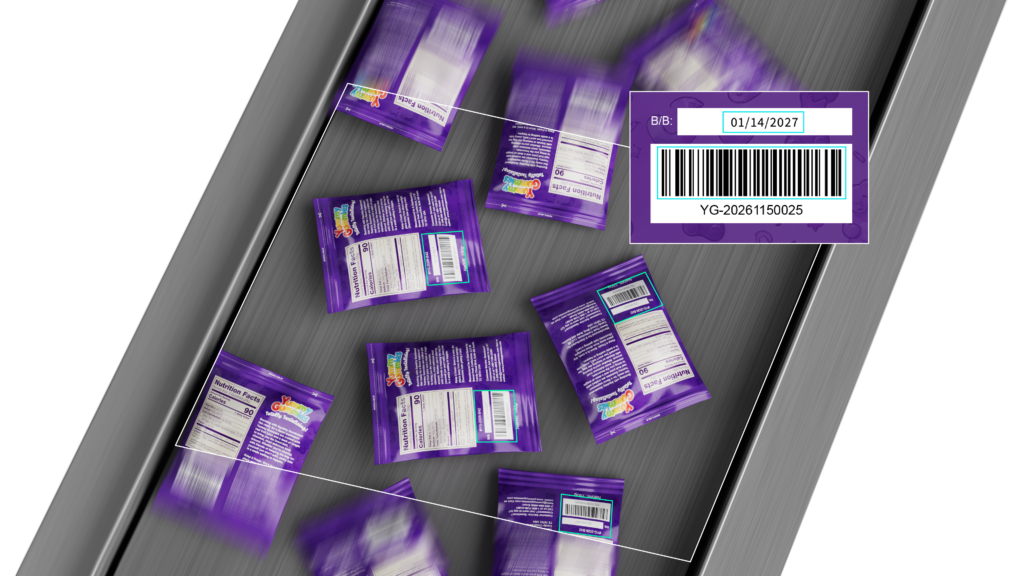
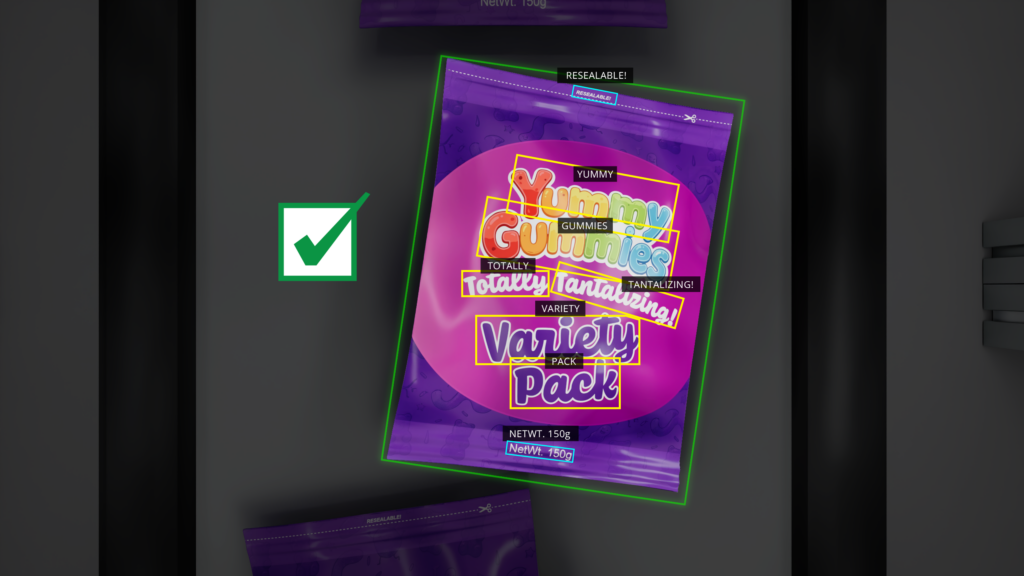
Gocator 2D Smart Cameras support high-throughput traceability workflows by combining fast image acquisition with integrated inspection tools and industrial communication. This allows manufacturers to move beyond simple code reads and build complete inline verification steps directly into the inspection process.
- Up to 81 frames per second image acquisition
- On-device GPU-accelerated processing
- Integrated barcode reading and OCR
- Embedded validation logic and output handling
- Support for industrial communication and system-level response
In practice, this means inspection results can be generated and acted on immediately, whether the task is verifying lot codes, confirming label content, or rejecting products with missing or invalid identifiers.
Traceability Is More Than Reading a Code
In production, traceability often requires more than barcode presence. Systems may also need to confirm that the correct code is applied to the correct product, validate printed dates or serialized identifiers, archive inspection results, and maintain data links to plant control systems.
For that reason, the value of a smart camera is not just that it can decode a symbol. It is that it can support the broader inspection workflow around that symbol, including validation, data handling, and production response.
For applications requiring auditability and record retention, inspection results can be archived locally or sent via FTP for centralized storage. Serialized identifiers and part-specific data can also be incorporated into file naming through PLC, PC, or SDK inputs, helping connect inspection results to downstream traceability systems.
Where This Approach Fits Best
Deep edge AI code reading is especially well suited to applications where manufacturers need to combine code reading with inspection logic in a compact, production-ready system.
Typical examples include:
- Food and beverage packaging verification
- Pharmaceutical label and date-code validation
- Electronics serialization and tracking
- Automotive component traceability