Supporting Fair Compensation, Opportunity, and Transparency in British Columbia
Understanding Our Commitment to Pay Equity and Workforce Representation
At LMI Technologies, we believe an inclusive workplace—where every team member is recognized, supported, and rewarded fairly—is fundamental to our long-term success. We uphold fair and consistent compensation practices through regular reviews, structured governance, and transparent reporting.
In accordance with British Columbia’s pay transparency requirements, we publish annual pay transparency metrics for our British Columbia workforce. The data presented on this page applies specifically to employees covered by LMI Technologies’ British Columbia reporting and should not be interpreted as representing LMI Technologies’ global workforce.
These insights help us evaluate our workforce composition, establish a clear baseline, and guide ongoing initiatives that support equitable career growth across all levels.
Key Concepts: Equal Pay vs. Median Pay Gap
When evaluating pay transparency data, it is helpful to distinguish between two key measures:
1. Equal Pay for Equal or Similar Work
Equal pay ensures that employees performing identical or substantially similar roles receive equitable compensation, factoring in objective criteria such as experience, qualifications, role responsibilities, and performance.
2. Organizational Median Pay Gap
The median pay gap compares overall median earnings across the entire organization regardless of role, department, or seniority. This metric reflects overall representation across job categories and compensation levels rather than pay equity for specific roles.
A median pay gap, on its own, does not indicate that employees performing comparable work are compensated differently. Instead, it provides insight into workforce representation across all levels of the organization.
Understanding the Company-Wide Median Pay Gap
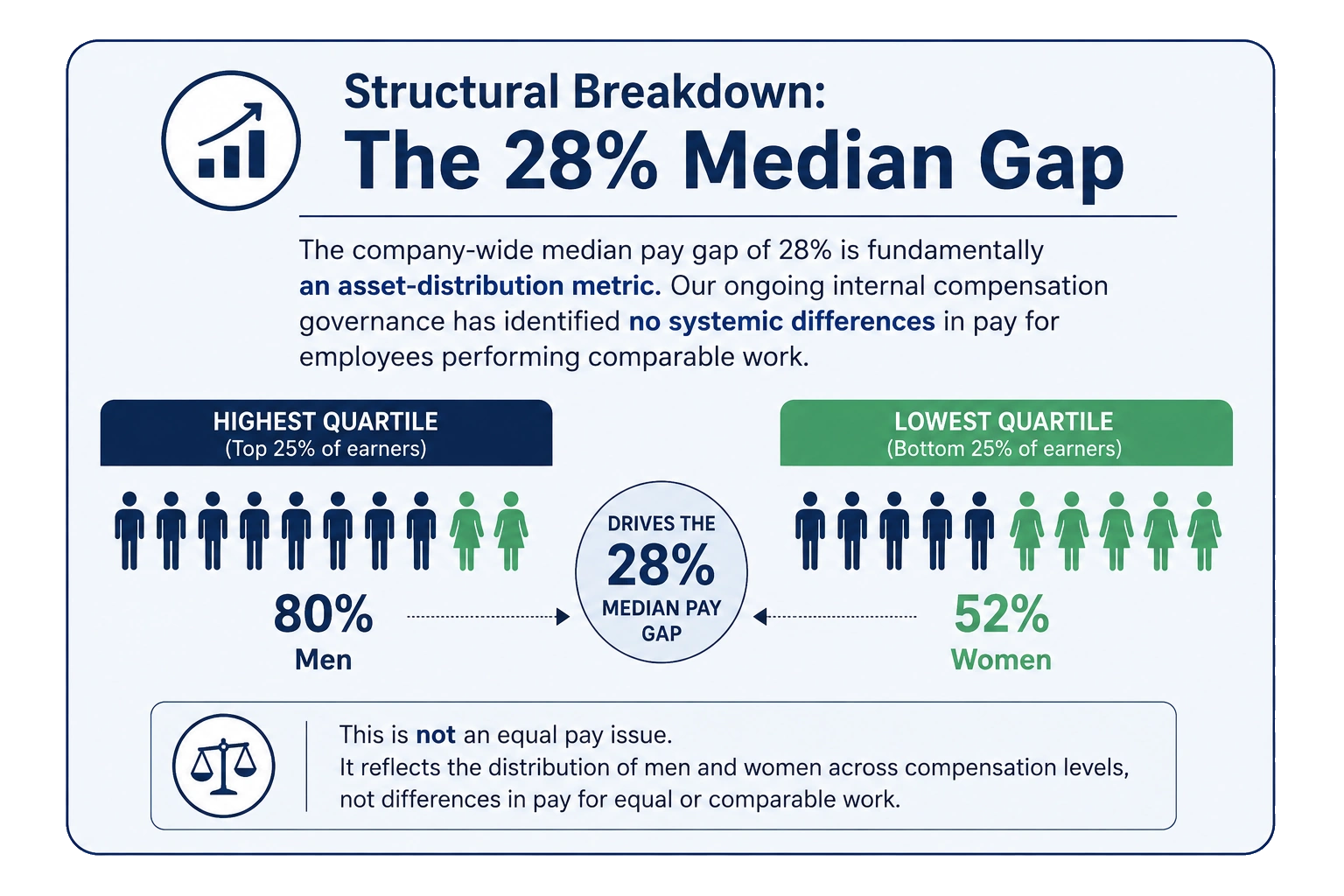
For 2025, LMI Technologies reports an organizational median pay gap of 28% for its British Columbia workforce.
This figure reflects the overall distribution of employees across the organization rather than compensation differences for employees performing comparable work. As with many technology companies, workforce composition influences the overall median calculation.
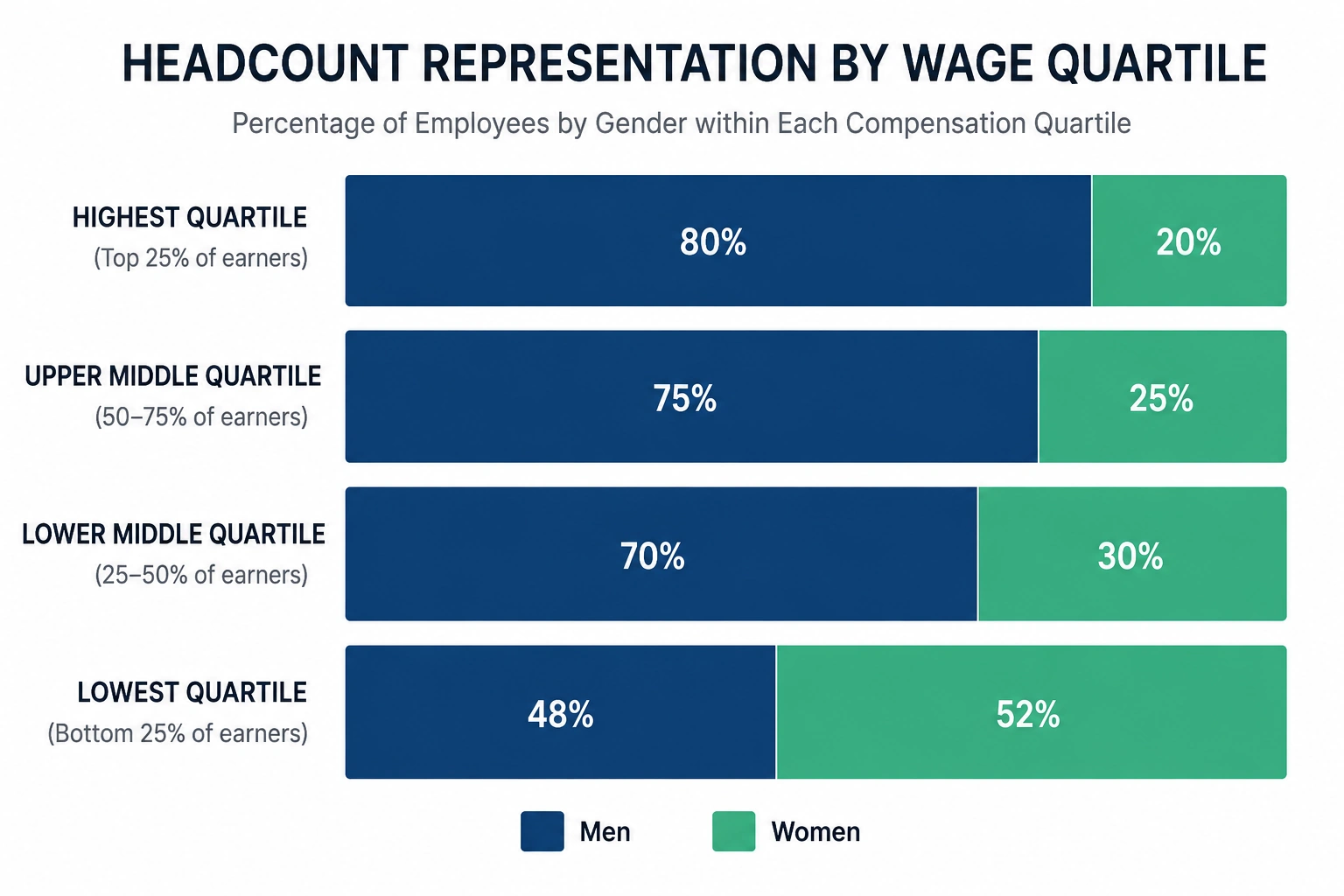
Within our British Columbia workforce, approximately 80% of employees within the highest pay quartile are men, while 52% of employees within the lowest pay quartile are women. This distribution contributes to the reported organizational median pay gap by affecting where employees are represented across compensation levels.
Structural Breakdown: The 28% Median Gap
Headcount Representation by Wage Quartile
Our internal compensation reviews confirm no systemic pay discrepancies for employees performing comparable work within our established pay bands. The reported British Columbia median pay gap primarily reflects historical representation trends across technical and leadership roles within our BC workforce.
Identifying these trends directly shapes our talent strategies, guiding our recruitment, mentorship, succession planning, and leadership development programs to cultivate broader representation.
Our Ongoing Priorities
Fostering a Representative Workforce
Pay transparency is a continuous commitment. By consistently monitoring workforce composition and compensation data, we actively refine our talent frameworks and support internal mobility.
Our strategy focuses on three key areas:
Expanding Leadership Development
We are expanding succession planning, mentorship programs, and professional pathways to prepare employees across all demographics for senior technical and leadership roles.
Strengthening Inclusive Recruitment
We partner with educational institutions, industry groups, and professional networks to diversify candidate pipelines and strengthen inclusive hiring for specialized roles.
Maintaining Robust Compensation Governance
Annual compensation evaluations ensure consistent alignment with our pay equity standards. Rigorous oversight helps us maintain fairness, transparency, and market competitiveness as our organization grows.